
Joint Health Guide: Stiff Knees, Osteoarthritis and Where SynoCell Fits
Osteoarthritis wears down the cartilage that cushions joints, causing pain and stiffness. Guidelines put exercise first, plus weight loss if you are overweight; losing 5% or more can matter. Canes, braces and tai chi also help. Supplements add small benefits at best and do not rebuild cartilage. SynoCell can sit beside these habits.
What is osteoarthritis, and why do joints feel stiff?
Osteoarthritis is the most common kind of arthritis. Over time, the smooth cartilage that cushions the ends of bones wears thin, and the joint around it changes. Knees, hips, hands and the lower back are the usual places.
Joint stiffness is the tight, rusty feeling after rest. Many people notice it first thing in the morning or after sitting through a long drive or a movie. With osteoarthritis, it often eases once you start moving.
The good news is that movement itself is part of the answer. The National Institute of Arthritis and Musculoskeletal and Skin Diseases says exercise can lower joint pain and stiffness and improve flexibility and strength (NIAMS Osteoarthritis).
Pain with use
Aches that build on stairs, long walks or a day in the garden, and ease with rest.
Stiffness after rest
Tightness in the morning or after sitting that loosens as you move.
Less range
Harder to bend a knee fully, kneel or make a tight fist.
Creaks and grinding
A crunching feeling in the joint, often harmless on its own.
What do doctors recommend first for knee and hip osteoarthritis?
Exercise and weight loss come first. The 2019 guideline from the American College of Rheumatology and the Arthritis Foundation strongly recommends exercise for everyone with osteoarthritis and weight loss for people who are overweight with knee or hip osteoarthritis (ACR/Arthritis Foundation guideline, 2019). It also supports simple aids and programs.
Non-drug steps in the 2019 ACR/Arthritis Foundation guideline
| Approach | Guideline view | Everyday example |
|---|---|---|
| Exercise | Strongly recommended for all | Walking, cycling, water exercise, strength moves |
| Weight loss | Strongly recommended if overweight (knee, hip) | A loss of 5% or more can matter |
| Tai chi | Strongly recommended (knee, hip) | Slow, flowing classes at a community center |
| Cane | Strongly recommended (knee, hip) | Held in the hand opposite the sore side |
| Braces and splints | Recommended for some knee and thumb-base problems | Fitted by a clinician or therapist |
| Self-management programs | Strongly recommended | Classes that teach pacing and goal setting |
A 2026 update summary keeps the same core advice: strongly for exercise and weight loss (ACR OA guideline update summary, 2026). NIAMS lists the same first steps.

Ready to try SynoCell?
Best value$39 a bottle · $234 for 6
How do exercise and weight loss help stiff joints?
Strong muscles take load off the joint, and movement keeps it flexible. Less body weight also means less force on knees and hips with every step. NIAMS says losing weight can lower pain and improve movement, especially in knees and hips.
- 1
Start small
Begin with 10 minutes of easy walking or cycling on most days. NIAMS advises starting slowly.
- 2
Add strength
Two or three days a week, try sit-to-stands from a chair, wall push-ups and gentle leg raises.
- 3
Keep it flexible
Daily range-of-motion moves: knee bends, ankle circles, finger stretches.
- 4
Build week by week
Add a few minutes or one more set each week. Mild soreness that fades by the next day is normal.
For weight, small numbers matter. The 2019 guideline notes that losing 5% or more of body weight can make a difference. Here is the math for one example.
What can joint supplements do, and what can they not do?
At best, some supplements give a small lift in comfort. None has been shown to rebuild cartilage. NIAMS does not list supplements among osteoarthritis treatments, and NCCIH says gains from ASU and boswellia may be too small to matter to some people (NCCIH Osteoarthritis: In Depth).
Common joint supplements and the evidence
| Supplement | What reviews or guidelines say |
|---|---|
| Glucosamine | ACR strongly recommends against it |
| Chondroitin | ACR recommends against it for knee and hip |
| Fish oil, vitamin D | ACR conditionally recommends against them for osteoarthritis |
| ASU | Small-to-moderate symptom benefit; no effect on joint space |
| Boswellia | Pain and function improved, but trials varied a lot |
| Oral hyaluronic acid | 9 of 11 small studies improved; no pooled size |
What a supplement can do
- May ease pain or stiffness a little for some people
- Can fit into a daily routine
- Some ingredients have human trials behind them
What a supplement cannot do
- Do not rebuild or repair cartilage
- Do not treat arthritis or replace exercise
- Can interact with medicines such as blood thinners
The FDA does not approve supplements before they are sold. NCCIH also notes FDA warnings about arthritis products secretly tainted with prescription drugs, so buy only from sources you can verify.
Which daily habits are kind to your joints?
Small changes across the day add up. None of these needs a gym, and most take a minute or less.
Stairs
Lead with the stronger leg going up and the sorer leg going down. Use the handrail.
Gardening
Kneel on a cushioned pad, use long-handled tools and switch tasks often.
Walks
Choose flat, even paths at first. Supportive, cushioned shoes make each step easier.
Hands
Pick thick-handled pens and kitchen tools. Use your palm, not your fingertips, to push and lift.
Sitting
Stand up and move for a minute every half hour. Long, still sitting feeds stiffness.
Sleep
Good sleep makes aches easier to cope with. A pillow between the knees can ease side sleeping.
For more ideas, read joint-friendly daily habits on our journal.
What does a simple joint-friendly routine look like?
A good routine is short, repeatable and spread through the day. Here is one example. Adjust it to your own joints and your doctor's advice.
Before you get up, bend and straighten each knee 10 times and make slow fists. Take a warm shower. Then walk around the house for a few minutes before you sit down to breakfast.
Take a 10- to 20-minute walk. Every half hour of sitting, stand and move. Use a cart or bag with wheels for heavy shopping, and carry loads close to your body.
Do your strength moves: sit-to-stands, wall push-ups and leg raises. Finish with gentle stretches. A warm pack can ease a sore joint before bed.
Try one longer activity you enjoy, such as a swim, a tai chi class or a bike ride. Once a week, note how stairs and walks feel so you can see progress.
Start your 90-day window today
Best value$39 a bottle · $234 for 6
When should you see a doctor about joint pain?
See a doctor promptly if a joint suddenly changes or you feel unwell. Most stiffness from osteoarthritis builds slowly. These signs point to something that needs a proper check.
- A joint that is swollen, red or hot to the touchSee a doctor
- Joint pain with a fever or feeling generally unwellSame day
- Sudden, severe pain, or pain after a fall or injurySame day
- You cannot put weight on a leg, or a joint locks or gives waySee a doctor
- Morning stiffness that lasts a long time or affects many jointsBook a visit
- Pain that keeps getting worse or wakes you at nightBook a visit
Where does a joint supplement like SynoCell fit?
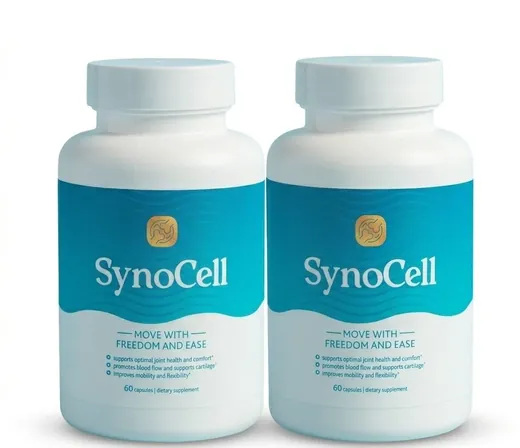
On top of the plan, never in place of it. SynoCell is a capsule taken as 2 capsules a day. The brand's Supplement Facts list ASU 310 mg, quercetin 310 mg, boswellia extract 200 mg, hyaluronic acid 180 mg and BioPerine 5 mg. Three of those amounts match or sit inside amounts used in studies. No study has tested the formula itself.
The label says it "supports optimal joint health and comfort" and "improves mobility and flexibility." *†These statements have not been evaluated by the Food and Drug Administration. This product is not intended to diagnose, treat, cure, or prevent any disease.

Read the SynoCell side effects page and the full ingredient breakdown before you order.
Joint health questions
What is the best thing to do for osteoarthritis of the knee?
Regular exercise is the top recommendation, plus weight loss if you are overweight. The 2019 ACR and Arthritis Foundation guideline strongly recommends both (ACR/Arthritis Foundation guideline, 2019). A cane or knee brace can also help some people. Start slowly and build up.
Do joint supplements work for osteoarthritis?
Some help a little, many do not, and none rebuild cartilage. ASU and boswellia showed small gains in pain and function in reviews. Guidelines recommend against glucosamine and chondroitin. Any supplement works best on top of exercise and weight control.
What supplements help with joint health?
The ones with the most human data are ASU, boswellia and oral hyaluronic acid, and their effects are small. Major guidelines did not assess them. Talk with your clinician before adding any supplement, especially if you take blood thinners.
How do you relieve joint stiffness in the morning?
Move gently before you get up, then take a warm shower and do a few easy range-of-motion moves. Stiffness from osteoarthritis usually eases once you get going. Stiffness that lasts a long time each morning is worth a doctor visit.
Is walking good for knee osteoarthritis?
Yes, for most people. Walking is a simple, low-cost form of the exercise guidelines recommend. Start with short, flat walks, wear supportive shoes and add a few minutes each week.
How much weight loss helps knee pain?
Losing 5% or more of your body weight can make a real difference for knee and hip osteoarthritis, according to the 2019 ACR guideline. For a 200-pound person, that is about 10 pounds.
When should I see a doctor for joint pain?
See a doctor soon if a joint is swollen, red or hot, if you have a fever, or if pain comes on suddenly or after a fall. Also go if you cannot put weight on a leg or the pain keeps getting worse.
Does glucosamine work for joints?
Major guidelines say no. The ACR strongly recommends against glucosamine for knee, hip and hand osteoarthritis, and its 2026 update keeps that advice (ACR OA guideline update summary, 2026). SynoCell does not contain glucosamine or chondroitin.
Are joint supplements for humans the same as for dogs?
No. Many joint products online are made for dogs, cats or horses, with different doses and rules. SynoCell is for adult humans only. Ask a vet about any product for a pet.
Ready to try SynoCell?
Order from the U.S. authorized merchant, keep your order email, and you are covered by the 90-day money-back guarantee. Questions first? Call +1 (302) 200-3480.
- Secure checkout
- 90-day money-back pledge
- Ships from the US
- Tracking by email
Keep reading
Ingredients
All five ingredients, each label amount next to the dose used in studies.
Read more →Joint-friendly daily habits
Exercise, the 5% weight goal, footwear, pacing and when to see a doctor, with supplements as a small extra.
Read more →Do joint supplements work?
What trials and guidelines say about joint supplements, how long to wait and how to judge any product.
Read more →