
Hyaluronic Acid in SynoCell: Oral Joint Research in Plain English
Hyaluronic acid is a natural part of joint fluid. Taken by mouth at 30–300 mg a day, it improved pain, function or stiffness in 9 of 11 small studies, with rare, mild side effects. The review gave no pooled effect size. SynoCell lists 180 mg per serving. Capsules and joint injections are different and cannot be compared.
What is hyaluronic acid, and why is it in SynoCell?
A substance your joints already make, taken as a capsule.

Hyaluronic acid is a natural part of the fluid inside your joints. That fluid helps the ends of bones glide past each other when you bend a knee or grip a jar. Your skin and eyes contain it too.
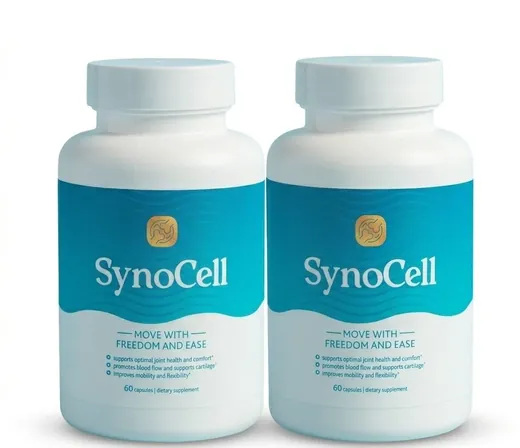
Supplements offer hyaluronic acid by mouth. SynoCell lists 180 mg per 2-capsule serving. It is one of five SynoCell ingredients.
The idea is simple: give the body a raw material it already uses in joint fluid. Whether swallowed hyaluronic acid makes a noticeable difference is the question the research tries to answer.
- Found in
- Joint fluidalso skin and eyes
- In SynoCell
- 180 mgper 2 capsules
- Studied range
- 30–300 mga day, by mouth
- Source
- Not publishedfor the SynoCell ingredient
Hyaluronic acid supplements for joints: what the research says
Eleven small studies, one review.
The research leans positive but is small. A 2024 systematic review looked at oral hyaluronic acid for osteoarthritis and low back pain (de Carvalho & Davidson, 2024). Here is what it covered.
de Carvalho & Davidson, 2024, at a glance
| Detail | What the review reported |
|---|---|
| Studies included | 11 |
| People in total | 597, aged 40 to 70 |
| Daily doses | 30 to 300 mg by mouth |
| How long people were followed | 4 weeks to 12 months |
| Studies reporting improvement | 9 of 11 (pain, WOMAC, function or stiffness) |
| Side effects | Rare and mild |
How the 11 oral hyaluronic acid studies came out
WOMAC is a standard survey about knee and hip pain, stiffness and daily tasks. Lower scores mean fewer problems. In plain terms, most studies found people felt somewhat better on tasks like walking and climbing stairs.
How strong is the hyaluronic acid evidence behind SynoCell?
Encouraging direction, limited proof.
It is early-stage evidence. The pattern is encouraging, but the review has real limits that keep us from calling the benefit proven.
What looks good
- 9 of 11 studies reported better scores
- Side effects were rare and mild
- Follow-up ran as long as 12 months in some studies
- The SynoCell amount sits inside the studied range
What holds it back
- The review searched only one database, PubMed
- No pooled effect size, so the size of benefit is unknown
- No formal grading of study quality
- Studies were small, and some covered back pain, not joints
Major osteoarthritis guidelines do not address hyaluronic acid pills. That is not a ruling against them. It means the evidence has not yet been strong enough to weigh.

Ready to try SynoCell?
Best value$39 a bottle · $234 for 6
Hyaluronic acid supplements for joints dosage: how SynoCell compares
Label amount next to the studied range.
The 180 mg in SynoCell falls in the upper middle of the 30–300 mg range used in the studies. It is six times the lowest studied dose and a little more than half of the highest.
Oral hyaluronic acid amounts on one scale (bar length = share of 300 mg)
More is not clearly better. The review did not show that higher doses worked better than lower ones. Products also differ in the size of their hyaluronic acid molecules, and the size used in SynoCell is not published.
Oral hyaluronic acid vs injections: what is the difference?
Same molecule, two very different routes.
They share a name but are very different things. An injection is a medical procedure. A capsule is a dietary supplement. The table sets them side by side, without guessing at numbers that are not in our sources.
Two forms of hyaluronic acid, compared simply
| Question | Capsule (like SynoCell) | Joint injection |
|---|---|---|
| How it gets in | Swallowed with water | Placed directly into the joint with a needle |
| Who gives it | You, at home | A doctor, in a clinic |
| What it is | Dietary supplement | Medical treatment |
| Research on this page | 11 small oral studies (2024 review) | Not covered here |
| Can results be swapped? | No. Injection results say nothing about pills | No. Pill results say nothing about injections |
- 1
You swallow it
The capsule opens in your stomach and releases a dry powder.
- 2
Digestion goes to work
Like other food parts, it passes through the gut, where it may be broken down.
- 3
Some is absorbed
Part of it enters the body. Our sources do not say how much reaches a joint.
- 4
Results are judged by symptoms
Studies measured pain, stiffness and function, not joint fluid levels.
How long does hyaluronic acid in SynoCell take to work?
Weeks, not days.
Give it several weeks. Studies followed people for 4 weeks up to 12 months, so a quick change is not expected. The 90-day money-back pledge leaves room for a fair trial.
- Day 1
Write a baseline
Note how your knees or hands feel on stairs, walks or while gardening.
- Day 28
Shortest study length
The briefest studies ran about 4 weeks. Compare your notes.
- Day 60
Check the pattern
Look for steady change, not one good or bad day.
- Day 90
Decide
Keep going, stop, or use the pledge before the window ends.
Hyaluronic acid side effects and what the SynoCell label shows
Mild in studies; some label details still missing.
Side effects were rare and mild in the studies reviewed (de Carvalho & Davidson, 2024). The bigger open questions are about the product details that are not published yet.
- Hyaluronic acid 180 mg per 2-capsule serving (brand Supplement Facts)Shown
- Source of the hyaluronic acid, such as fermentation or animalNot published
- Molecular size of the hyaluronic acidNot published
- Other ingredients and capsule materialNot published
- Directions and warnings printed on the bottleNot published
Pregnancy and breastfeeding were not studied. The other ingredients in SynoCell carry their own cautions, mainly with blood thinners. Read the SynoCell side effects page and the Supplement Facts page before you start.
How hyaluronic acid fits with the other SynoCell ingredients
One joint-fluid compound among four plant ingredients.
Hyaluronic acid is the only ingredient in SynoCell that is a natural part of joint fluid. The others come from plants. No study has tested the five together.
ASU 310 mg
Avocado and soybean oil fraction with small symptom benefits in knee and hip trials.
Read more →Boswellia 200 mg
Resin extract with mixed-quality trials that lean positive for knee pain.
Read more →Quercetin 310 mg
Plant flavonoid with no stand-alone joint trial.
Read more →BioPerine 5 mg
Black pepper extract that changes how some compounds are absorbed.
Read more →Daily walks and simple strength moves still do the most for stiff joints. A capsule sits beside those habits.
Hyaluronic acid questions
Do hyaluronic acid supplements work for joint pain?
They may help a little. A 2024 review found that 9 of 11 small studies reported better pain, function or stiffness scores with oral hyaluronic acid (de Carvalho & Davidson, 2024). The review gave no pooled effect size, so how much it helps is unclear.
How much hyaluronic acid should I take for my joints?
Studies used 30 to 300 mg a day by mouth. SynoCell lists 180 mg per 2-capsule serving, inside that range. Follow the directions on your bottle and do not double up with another hyaluronic acid product without asking a clinician.
Is oral hyaluronic acid as good as an injection?
They cannot be compared from the data on this page. Injections are a medical procedure placed straight into the joint by a doctor, while capsules are swallowed and go through digestion. They were studied separately, so ask your doctor which option fits you.
What are the side effects of hyaluronic acid capsules?
Side effects were rare and mild in the studies reviewed. That said, the review did not grade study quality. If you notice anything unusual, stop and check with a clinician.
How long does it take for hyaluronic acid to work for joints?
Studies followed people for 4 weeks to 12 months. A fair first check is about 4 to 8 weeks of daily use. Keep short notes on stairs, walks and stiffness so you can compare honestly.
Can hyaluronic acid rebuild cartilage?
No supplement has been shown to rebuild cartilage, and SynoCell does not claim to. The oral hyaluronic acid studies looked at symptoms such as pain, stiffness and function, not cartilage repair.
Is it safe to take hyaluronic acid every day?
In the studies reviewed, daily use for up to 12 months was linked with rare, mild side effects. Pregnancy and breastfeeding were not studied. If you take prescription medicine, show your pharmacist the whole label.
Does hyaluronic acid help knee pain?
Some small studies say yes. The people studied were adults aged 40 to 70 with osteoarthritis or low back pain. The results lean positive, but the studies were small and not pooled.
Where does hyaluronic acid in supplements come from?
Most supplement hyaluronic acid is made by fermentation with bacteria, and some comes from animal sources such as rooster combs. The source used in SynoCell is not published. If you follow a vegan diet or avoid animal products, ask the seller before you buy.
Is liquid hyaluronic acid better than capsules for joints?
There is no good evidence that one form is better. The review covered oral hyaluronic acid in general. Pick the form you will take every day, and check the milligrams per serving.
Ready to try SynoCell?
Order from the U.S. authorized merchant, keep your order email, and you are covered by the 90-day money-back guarantee. Questions first? Call +1 (302) 200-3480.
- Secure checkout
- 90-day money-back pledge
- Ships from the US
- Tracking by email
Keep reading
Ingredients
All five ingredients, each label amount next to the dose used in studies.
Read more →Boswellia
Indian frankincense extract: 200 mg vs the 100–250 mg studied, mixed-quality trials, two medicine checks.
Read more →Do joint supplements work?
What trials and guidelines say about joint supplements, how long to wait and how to judge any product.
Read more →