
Daily Habits for Sore Joints: Where SynoCell Fits After Exercise
Exercise and weight control come first. The American College of Rheumatology strongly recommends exercise for everyone with osteoarthritis, and losing 5% or more of body weight can help knees and hips. Add supportive shoes, pace tasks like gardening, and see a doctor for a hot, swollen joint. A supplement is a small extra.
Why daily habits come before any joint supplement
Because they work better, and the evidence is far stronger. The American College of Rheumatology strongly recommends exercise for everyone with osteoarthritis, and weight loss for people with knee or hip osteoarthritis who are overweight (ACR/Arthritis Foundation guideline, 2019). Its 2026 update keeps both at the top (ACR OA guideline update summary, 2026).
NIAMS says the same in plain words. Exercise can lower joint pain and stiffness and build strength and flexibility. Losing weight can lower pain and improve movement, especially in the knees and hips (NIAMS Osteoarthritis). Supplements are not on its list of treatments.
None of this needs a gym or a big budget. It needs small steps you repeat most days: a walk after lunch, a few chair stands while the kettle boils, and shoes that do some of the work for you.
What exercise is best for stiff knees and hips?
The best exercise is one you will keep doing. Most people with stiff joints do well with a mix of three kinds of movement. NIAMS advises starting slowly and building up.
Walking, cycling, swimming and water exercise raise your heart rate with little pounding on the joints.
Start with 10 minutes and add a few minutes each week as it feels comfortable.
Strong thigh and hip muscles take load off the knee. Try chair stands, step-ups on the bottom stair and wall sits.
Two or three short sessions a week is a good start.
Range-of-motion moves keep joints from tightening. Try gentle knee bends, ankle circles and hand opening and closing.
These are good first thing in the morning or after sitting.
- 1
Week 1
A 10-minute walk most days, plus 5 chair stands.
- 2
Weeks 2–3
Add a few minutes to each walk and a second set of chair stands.
- 3
Week 4
Try a new activity, such as a pool class or a short bike ride.
- 4
After that
Keep the habit. Small, steady gains beat big bursts.
Some muscle soreness after a new activity is normal. Sharp pain or swelling that lasts into the next day means you did too much. Ease back and build more slowly. A physical therapist can design a plan that fits your joints.

Ready to try SynoCell?
Best value$39 a bottle · $234 for 6
How much does weight loss help knee pain?
More than most people expect. The ACR guideline notes that a loss of 5% or more of body weight can make a difference for knee and hip osteoarthritis. That is a modest, reachable goal for many adults.
You do not need to reach an ideal weight to feel a change. Slow, steady change through meals you enjoy and more daily walking tends to last longer than a crash diet.
If weight loss is hard, talk to your doctor. They can help with a plan or a referral, and they can check whether any of your medicines affect weight.
What shoes are best for knee and joint pain?
Comfortable, supportive shoes that fit well are a simple daily help. Shoes cannot fix a joint, but poor ones can make a walk harder than it needs to be.
- A cushioned sole that softens each stepLook for
- A firm heel and enough room for your toesLook for
- Good grip for wet paths and garden stepsLook for
- Worn-out soles that lean to one sideReplace
- High heels or thin, flat slip-ons for long walksAvoid
Try shoes on later in the day, when feet are slightly larger, and walk around the store before you buy. If one knee or foot hurts more than the other, a physical therapist or podiatrist can check whether inserts would help.
How to pace your day with stiff joints
Pacing means spreading effort through the day so joints are not overloaded at once. It lets you do more, not less, over a week.
Pacing ideas for everyday tasks
| Daily task | Harder on joints | Easier on joints |
|---|---|---|
| Gardening | Two hours of kneeling in one go | 20 minutes, a break, then 20 more; use a kneeler or raised bed |
| Stairs | Rushing up with full bags | One step at a time, holding the rail; carry less, more often |
| Shopping | One long trip with heavy bags | A cart or wheeled bag; two shorter trips |
| Housework | Cleaning the whole house in a morning | One room a day; sit for tasks you can do seated |
| Sitting | An hour without moving | Stand and walk a little every 30 minutes |
A useful rule: if a task leaves you sore for two days, cut it in half next time. Notice which jobs set you back, and plan them for the times of day when your joints feel best.
Small joint-friendly habits at home
Little changes add up when you repeat them every day. Pick two or three that fit your routine.
- Before you get up: bend and straighten each knee 10 times and circle your ankles.
- Warm water: a warm shower or bath can ease morning stiffness.
- Kitchen moves: rise onto your toes or do a few chair stands while you wait for the kettle.
- Hands: open and close your fists and spread your fingers wide a few times a day.
- Sleep: a regular bedtime helps you cope better with aches the next day.
- Tools: jar openers, long-handled grabbers and lever taps save sore hands.
Keep a simple note of how your joints feel each week. It helps you see progress and gives your doctor useful detail.
Start your 90-day window today
Best value$39 a bottle · $234 for 6
When should you see a doctor about joint pain?
Most stiffness from wear is not an emergency, but some signs need a prompt check. A doctor can confirm what is going on and rule out other causes.
It is also worth booking a visit if morning stiffness lasts more than an hour most days, if several joints flare at once, or if pain stops you doing things you enjoy. Bring your notes and a list of every medicine and supplement you take.
If you take a blood thinner, ask before adding any joint supplement. Boswellia, quercetin and piperine all have blood-thinner signals. Our side effects page has the details.
Where a supplement like SynoCell fits in your routine
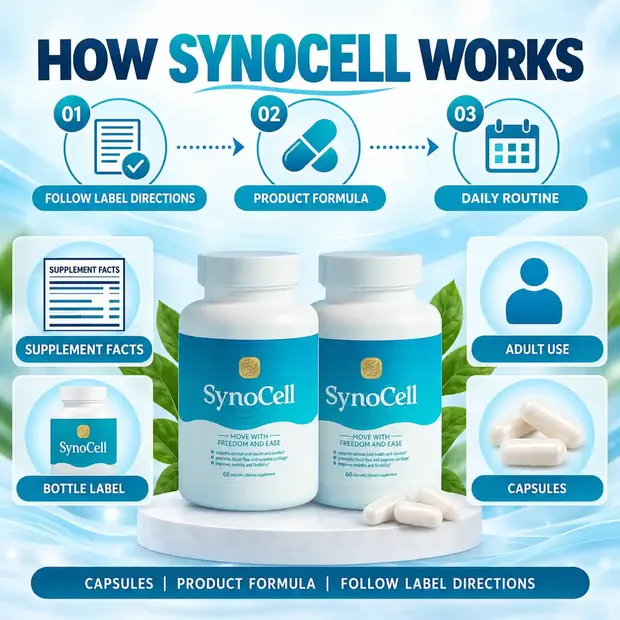
A supplement is a small extra, not the main plan. If you want to try one, SynoCell gives 2 capsules a day with ASU 310 mg, quercetin 310 mg, boswellia extract 200 mg, hyaluronic acid 180 mg and BioPerine 5 mg per serving.
Trials of ASU and boswellia found small to modest symptom benefits. The formula itself has not been tested. Keep your walking and strength work steady so you can tell what helps, and judge it within the 90-day pledge window.
Read boswellia for knee comfort, check how to use it and see the joint health guide for the full picture.
Joint-friendly habit questions
What is the best exercise for knee osteoarthritis?
The best exercise is one you will keep doing. Walking, cycling, water exercise and simple strength moves for the thighs and hips all help. Doctors strongly recommend exercise for everyone with osteoarthritis.
Does losing weight help knee pain?
Yes, for many people. Losing 5% or more of body weight can matter for knee and hip osteoarthritis, and NIAMS says weight loss can lower pain and improve movement.
Should I rest a sore knee or keep moving?
Keep moving, but pace it. Short, regular activity usually beats long rest. On a bad day, do less, not nothing, and stop any move that causes sharp pain.
What shoes are best for knee pain?
Choose shoes with a cushioned sole, firm heel and good grip that fit well. Swap worn-out pairs. A physical therapist can advise if you need inserts.
When should I see a doctor about joint pain?
See a doctor soon if a joint is hot, red or very swollen, if you have a fever, cannot bear weight, were injured, or if pain lasts more than a few weeks or wakes you at night.
Can exercise make arthritis worse?
Guidelines say exercise helps people with osteoarthritis. Start slowly and build up. Some soreness after a new activity is common, but sharp or lasting pain means you should ease off and ask your doctor.
Do joint supplements replace exercise?
No. No supplement matches the benefit of exercise and weight control. A supplement is, at most, a small extra on top of good daily habits.
What helps stiff joints in the morning?
Gentle range-of-motion moves before you get up, a warm shower and a short walk often ease morning stiffness. If it lasts more than an hour most days, mention it to your doctor.
Is SynoCell a replacement for physical therapy?
No. SynoCell is a dietary supplement for joint comfort support. Physical therapy, exercise and weight control are the steps doctors recommend first.
Can SynoCell replace exercise for stiff knees?
No. Exercise and weight control come first, and a supplement is a small extra. Use SynoCell, if at all, alongside daily movement, and see a doctor for a hot, swollen joint.
Which daily habits matter more than a joint supplement like SynoCell?
Exercise comes first, and the ACR strongly recommends it for everyone with osteoarthritis. Weight control, supportive shoes and pacing tasks such as gardening follow, with SynoCell only a small extra.
Ready to try SynoCell?
Order from the U.S. authorized merchant, keep your order email, and you are covered by the 90-day money-back guarantee. Questions first? Call +1 (302) 200-3480.
- Secure checkout
- 90-day money-back pledge
- Ships from the US
- Tracking by email

Keep reading
Joint health guide
Osteoarthritis basics, what guidelines put first, daily habits, red flags and where a supplement fits.
Read more →Who it's for
Fit check for SynoCell: who it suits, who should ask a doctor first, and why.
Read more →Do joint supplements work?
What trials and guidelines say about joint supplements, how long to wait and how to judge any product.
Read more →