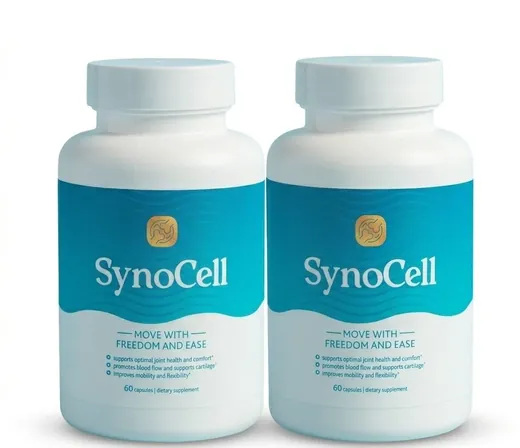
Quercetin in SynoCell: what 310 mg is and what the research says
SynoCell lists 310 mg of quercetin per 2-capsule serving. Quercetin is a plant flavonoid, and its joint research is mostly lab and animal work. The only human knee trial used 45 mg a day mixed with other ingredients. A Norwegian review judged 500 mg a day safe for adults, but quercetin can affect some medicines.
What is quercetin in SynoCell?
Quercetin is a flavonoid, a natural pigment made by plants. It is found in many fruits, vegetables and teas. Quercetin powder is bright yellow, and the color comes from the flavonoid itself.
SynoCell lists 310 mg of quercetin in each 2-capsule serving. It is one of five ingredients, next to ASU 310 mg, Boswellia extract 200 mg, hyaluronic acid 180 mg and black pepper extract 5 mg.
In supplements, quercetin is popular for general wellness. In joint products, it is usually added for its role in lab studies. The short version is this: the safety data are fair, and the joint data are thin. The quercetin page has the full profile.
What does the research say about quercetin and joints?
The evidence sits on the early rungs of the research ladder. Memorial Sloan Kettering describes the quercetin and osteoarthritis evidence as preclinical, which means lab and animal work.
The research ladder for quercetin and joints
| Rung | What it is | Where quercetin stands |
|---|---|---|
| 1. Lab studies | Effects on cells and enzymes in a dish | Where most joint data sit |
| 2. Animal studies | Effects on joints in animals | Results may not carry over to people |
| 3. Combination trial | One small human knee trial with other ingredients | One trial found |
| 4. Stand-alone trial | Quercetin alone in people with knee or hip osteoarthritis | None found |
So the honest answer is that quercetin for joint health is an idea under study. It has not been shown on its own in people.
The one human knee trial
The only knee trial we found is a 2012 study from Japan. It enrolled 40 Japanese adults with knee osteoarthritis symptoms and ran for 16 weeks against placebo.
The daily dose was glucosamine hydrochloride 1,200 mg, chondroitin sulfate 60 mg and quercetin glycosides 45 mg. Some knee symptom scores improved more than placebo.
Because quercetin was always given with the other two, nobody can tell which ingredient did what. The form was quercetin glycosides, a sugar-bound form, and the form in SynoCell is not published. SynoCell does not contain glucosamine or chondroitin.
Ready to try SynoCell?
Best value$39 a bottle · $234 for 6
How does 310 mg compare with the trial and the safety benchmark?
The SynoCell dose is much higher than the knee trial and lower than the adult safety benchmark.
Quercetin per day, three reference points
| Reference | Amount | Source |
|---|---|---|
| Knee trial (combination) | 45 mg | 2012 Japanese trial |
| SynoCell serving | 310 mg | Brand Supplement Facts |
| Adult safety benchmark | 500 mg | Norwegian review, at least 3 months |
310 mg is about 7 times the trial amount. A higher dose does not mean a bigger joint effect. Without a stand-alone trial, no one knows the best dose for joints. Compare all five ingredients on the ingredients page.
Is quercetin safe to take every day?
For healthy adults, the data look fair. A risk assessment by VKM, Norway's food safety committee, judged 500 mg a day of quercetin safe for adults for at least three months. Side effects in the studies it reviewed were few and mild. SynoCell lists 310 mg, which is below that level.
There are gaps. No data exist for pregnancy, breastfeeding or children. People with chronic kidney disease or a history of estrogen-dependent cancer may be more vulnerable and should ask their specialist first. Long-term use beyond three months has less data.
If an ache, rash or stomach upset starts after you begin any new supplement, stop it and talk to your doctor. A short note of the start date and what you felt helps. Our SynoCell side effects article covers the whole formula.
Does quercetin interact with medicines?
It can. In lab tests, quercetin blocks two liver enzymes, CYP3A4 and CYP2C19. Many common drugs are cleared by these enzymes. A case report also describes a rise in INR, a clotting test, in a patient on warfarin. The INR returned to normal after quercetin was stopped.
Two other SynoCell ingredients carry signals too. Boswellia may raise bleeding risk with blood thinners, and the piperine in BioPerine raised levels of some drugs in studies. The rule is simple: bring the SynoCell label to your pharmacist if you take any prescription medicine. See the BioPerine page for more.
Quercetin in SynoCell: common questions
How much quercetin is in SynoCell?
SynoCell lists 310 mg of quercetin per serving of 2 capsules. The bottle holds 30 servings. The label does not say which form of quercetin is used.
Is quercetin proven for joint pain?
No. Quercetin's joint research is mostly lab and animal work. The only human knee trial mixed it with glucosamine and chondroitin, so its own effect is unknown.
Who should ask a doctor before taking quercetin?
Anyone who takes a blood thinner such as warfarin, any other prescription medicine, or who has chronic kidney disease. People who are pregnant or breastfeeding should ask too, since there are no safety data for those stages.
Ready to try SynoCell?
Order from the U.S. authorized merchant, keep your order email, and you are covered by the 90-day money-back guarantee. Questions first? Call +1 (302) 200-3480.
- Secure checkout
- 90-day money-back pledge
- Ships from the US
- Tracking by email