
Is ASU Better Than Glucosamine? What SynoCell Contains
ASU has the better case today. Four trials with 664 people found a small to moderate drop in knee and hip pain scores at 300 mg a day, though joint space did not change. The American College of Rheumatology strongly recommends against glucosamine and advises against chondroitin. It did not assess ASU at all.
ASU vs glucosamine: what is the difference?
ASU and glucosamine are both sold for stiff, sore joints, but they come from different places and have different track records. Glucosamine is the famous one. ASU is the quieter one with, these days, slightly better evidence.
ASU stands for avocado/soybean unsaponifiables. It is the small part of avocado and soybean oils that does not turn into soap when the oil is processed. Glucosamine is a building block of cartilage, usually made from shellfish shells or by fermentation. Chondroitin, its frequent partner, is another cartilage component.
ASU and glucosamine side by side
| ASU | Glucosamine (and chondroitin) | |
|---|---|---|
| Source | Avocado and soybean oils | Shellfish shells or fermentation; chondroitin from animal cartilage |
| Dose in main trials | 300 mg a day | Varies by product |
| Symptom result | Small to moderate drop in pain scores | Not enough benefit for the guideline panel |
| Effect on joint space | None versus placebo | Not a guideline reason to use it |
| ACR guideline | Not assessed | Recommended against |
What did the ASU trials find for knee and hip osteoarthritis?
ASU gave a small to moderate improvement in symptoms. A pooled analysis of four randomized trials with 664 people found an effect size of 0.39 for pain and 0.45 for the Lequesne function index (Christensen et al., 2008).
Effect sizes are hard to picture, so here is another way to see it. The odds of counting as a responder were about 2.2 times higher on ASU than on placebo. Put another way, for every six people who took ASU, about one more person responded than would have on the dummy pill. That is a real but modest effect, the kind you might notice on a long walk rather than every hour of the day.
- 1
4 trials, 664 people
Adults with knee or hip osteoarthritis took ASU or a placebo.
- 2
300 mg a day
All trials used the same branded ASU product.
- 3
Pain effect size 0.39
A small to moderate change. Function was a little better at 0.45.
- 4
NNT of 6
About 1 extra responder for every 6 people treated.
Two cautions travel with these numbers. All four trials were funded by industry. And the benefit looked more likely in the knee than in the hip.
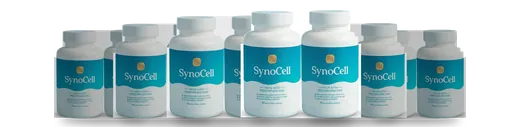
Ready to try SynoCell?
Best value$39 a bottle · $234 for 6
What does the Cochrane review say about ASU?
Cochrane found moderate-quality evidence that ASU helps a little, but not by much. Pain fell by 8.5 points on a 0 to 100 scale, and function improved slightly (Cameron & Chrubasik, Cochrane 2014).
Picture a pain score of 60 out of 100 on a bad morning. An 8.5-point drop brings it to about 51. Some people would notice that on the stairs. Others would not.
Cochrane also checked the joint itself. ASU did not preserve joint space on X-ray; the difference from placebo was -0.12 mm. The authors called ASU's benefit small and clinically questionable. That is why no one should describe ASU as a cartilage repair ingredient.
Where does the ACR stand on glucosamine and chondroitin?
The American College of Rheumatology and Arthritis Foundation strongly recommend against glucosamine for knee and hip osteoarthritis. They also recommend against chondroitin for the knee and hip (ACR/Arthritis Foundation guideline, 2019).
A 2026 update goes further. It strongly recommends against glucosamine, chondroitin and their combinations for knee, hip and hand osteoarthritis (ACR OA guideline update summary, 2026). It also advises, more gently, against fish oil and vitamin D for joint symptoms.
Exercise for everyone with osteoarthritis.
Weight loss for people with knee or hip osteoarthritis who are overweight. A 5% loss can help.
Glucosamine, chondroitin and their combinations (strongly, in the 2026 update).
Fish oil and vitamin D for joint symptoms (conditionally).
ASU, boswellia, turmeric and most other nutraceuticals were left out of the review.
Oral hyaluronic acid and quercetin are not addressed either.
Many people still buy glucosamine out of habit. If it is not doing anything for you after a fair trial, the guideline gives you good reason to stop. The money you save could go toward good walking shoes or a few sessions with a physical therapist, which the same guideline backs strongly.
Why is the ACR guideline silent on ASU?
Because the panel did not review it. Most nutraceuticals were left out of the 2019 guideline, so ASU, boswellia and turmeric received no recommendation either way. The 2026 update summary does not mention them either.
Silence is not approval. It means the guideline gives you no direction on ASU or boswellia, and you have to look at the trials yourself. The ASU trials show a modest symptom benefit, industry funding and no structural change.
NCCIH reads the evidence the same way: ASU and boswellia may give slight improvements in pain and function, possibly too small to matter to many patients (NCCIH Osteoarthritis: In Depth).
Is avocado soybean unsaponifiables 300 mg the right dose?
300 mg a day is the dose behind the ASU research. Every trial in the main meta-analysis used that amount, in one branded product made with a set ratio of avocado to soybean oil.
SynoCell lists 310 mg of ASU per 2-capsule serving. Here is how that lines up.
The amount is a close match. The ingredient may not be. ASU from other suppliers may differ in ratio and makeup, so a matching number does not guarantee a matching result. No trial has tested the SynoCell formula.
Read the full ASU ingredient page for the label comparison.
Start your 90-day window today
Best value$39 a bottle · $234 for 6
ASU and glucosamine side effects and safety
Neither ingredient showed major safety problems in trials, but little long-term data exists for ASU. NCCIH notes there is little safety information for herbal products like these.
The one clear ASU flag is soy. ASU comes from soybean oil, and soybeans are one of the nine major food allergens in the U.S. (FDA Food Allergies, 2026). The sources reviewed do not say whether ASU ingredients contain soy protein.
ASU: in its favor
- Small to moderate symptom benefit in four trials
- Dose is well defined at 300 mg a day
- Trials did not flag major side effects
ASU: the limits
- All four trials industry-funded
- No change in joint space
- Soy allergy question is unresolved
- Not assessed by guidelines
Where does SynoCell fit in the ASU vs glucosamine question?
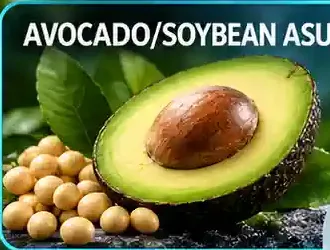
SynoCell uses ASU and contains no glucosamine or chondroitin. Along with 310 mg of ASU, the brand's Supplement Facts list quercetin 310 mg, boswellia extract 200 mg, hyaluronic acid 180 mg and BioPerine 5 mg per 2 capsules.
That is in line with where the evidence points today. It is not proof the formula works, because it has not been tested as a whole.
If you are switching from glucosamine, give the new routine 8 to 12 weeks and keep your exercise steady. Compare packs on the pricing page and read the joint supplements evidence guide for the bigger picture.
ASU and glucosamine questions
Is ASU better than glucosamine?
On current evidence, ASU looks a little better. ASU trials showed a small to moderate drop in knee pain scores, while the American College of Rheumatology strongly recommends against glucosamine. Neither one rebuilds cartilage.
What is avocado soybean unsaponifiables (ASU) used for?
ASU is a fraction of avocado and soybean oils studied for knee and hip osteoarthritis symptoms. Trials used 300 mg a day and found small to moderate benefits for pain and function.
Does the ACR recommend glucosamine?
No. The ACR and Arthritis Foundation strongly recommend against glucosamine for knee and hip osteoarthritis, and a 2026 update extends that to the hand and to glucosamine-chondroitin combinations.
Why doesn't the ACR guideline mention ASU?
The guideline panel left most nutraceuticals out of its review, so ASU, boswellia and turmeric were not assessed. Silence is not a recommendation for or against.
Is avocado soybean unsaponifiables 300 mg the right dose?
300 mg a day is the dose used in the main ASU trials, which tested one specific product. SynoCell lists 310 mg per serving, close to that amount, but other ASU ingredients may not be identical.
What are ASU supplement side effects?
Trials did not flag major problems, but little long-term safety data exists. ASU comes from soybean oil, and soy is a major food allergen, so people with a soy allergy should ask a clinician first.
Does glucosamine work immediately?
No. Glucosamine is not a pain reliever and does not act within hours, and the ACR advises against using it for osteoarthritis.
Does SynoCell contain glucosamine or chondroitin?
No. The brand's Supplement Facts list ASU, quercetin, boswellia extract, hyaluronic acid and BioPerine. There is no glucosamine or chondroitin in SynoCell.
Can I take ASU and glucosamine together?
There is no good evidence that the pair works better than ASU alone, and the guideline advises against glucosamine. If you take other medicines, check any combination with your pharmacist.
Is SynoCell a joint supplement with ASU?
Yes. SynoCell is a joint supplement capsule whose first listed ingredient is ASU at 310 mg per 2-capsule serving, alongside quercetin, Boswellia, hyaluronic acid and BioPerine. The serving is 2 capsules a day.
How much ASU is in SynoCell compared with trials?
SynoCell has 310 mg of ASU per 2-capsule serving. The trials in this guide used 300 mg a day, so the label amount sits close to the studied dose. No trial has tested the SynoCell formula itself.
Ready to try SynoCell?
Order from the U.S. authorized merchant, keep your order email, and you are covered by the 90-day money-back guarantee. Questions first? Call +1 (302) 200-3480.
- Secure checkout
- 90-day money-back pledge
- Ships from the US
- Tracking by email
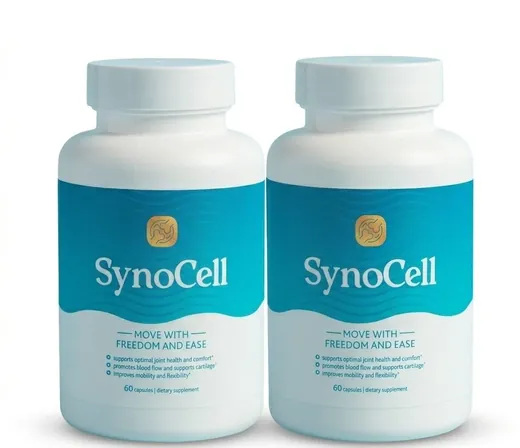
Keep reading
ASU
ASU 310 mg: what trials at 300 mg found, the cartilage question and soy allergy.
Read more →Joint health guide
Osteoarthritis basics, what guidelines put first, daily habits, red flags and where a supplement fits.
Read more →Do joint supplements work?
What trials and guidelines say about joint supplements, how long to wait and how to judge any product.
Read more →